
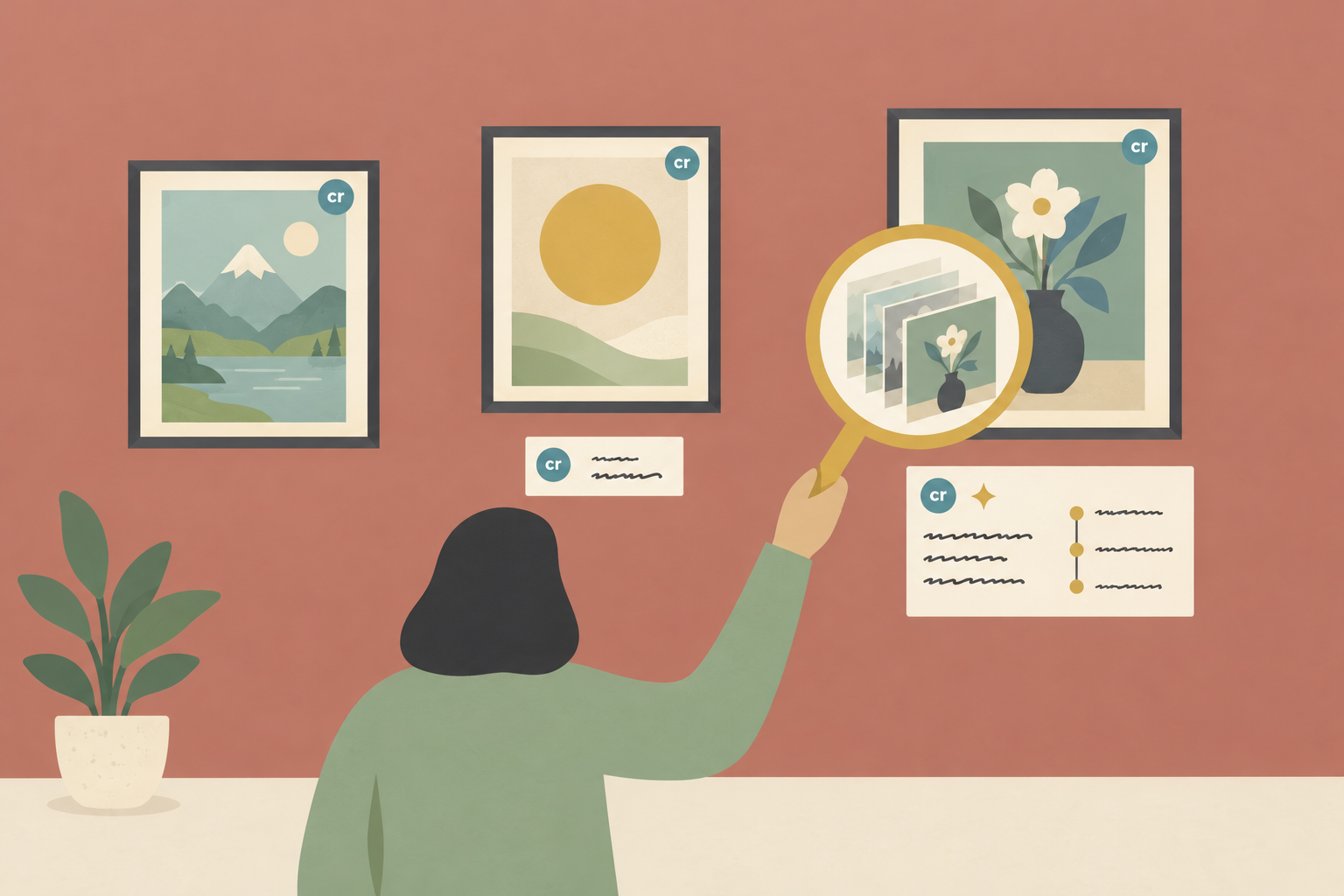
Role: Design lead, Microsoft media provenance (C2PA)
Products: Bing, Microsoft Designer, LinkedIn, Paint, Azure AI Foundry, Microsoft Content Integrity
Reach: 300M+ media consumers
Generative AI has made it easy to create realistic images, audio and video. As AI-generated content spreads online, people need a reliable way to tell where media comes from and how it was made. Microsoft is part of the Coalition for Content Provenance and Authenticity (C2PA), which developed Content Credentials, a standard that attaches information about a file’s origin and edit history to the file itself.
My goal was to define how people experience this information across Microsoft. I organized the Microsoft UX community within the C2PA coalition, set the design direction for provenance experiences across six products, and created the prototypes and component guides that product teams used to build them.
Starting with how people make trust decisions
Early on, I prototyped AI labels in Bing image search and the Edge address bar and tested them alongside a fabricated news article. Participants saw the label as a sign of a reputable source and trusted the article more. This showed me that a provenance label can shape trust as much as it informs. That’s why I made appropriate trust the guiding principle for every design decision that followed: give people enough context to judge content for themselves, in language they understand.
One framework, many products
Instead of a single label for every product, I developed a framework that matches the level of detail to what people are doing:
- Searching in Bing image search: a minimal label that informs without slowing people down
- Browsing for inspiration in Microsoft Designer: more detail as people evaluate images to reuse
- Reading social posts on LinkedIn: richer context about identity and attribution
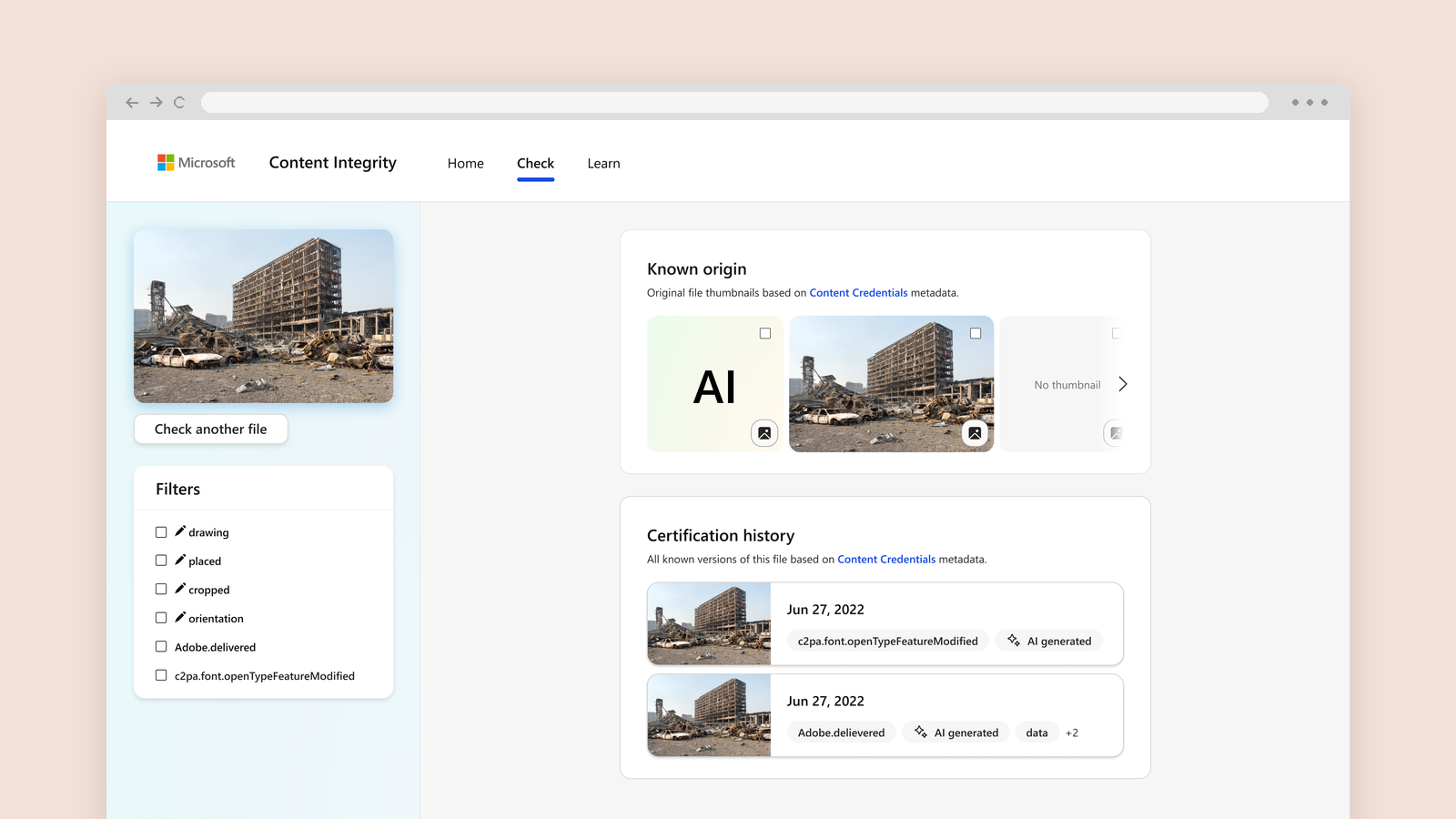
- Investigating media in Microsoft Content Integrity: full provenance history for journalists and campaigns
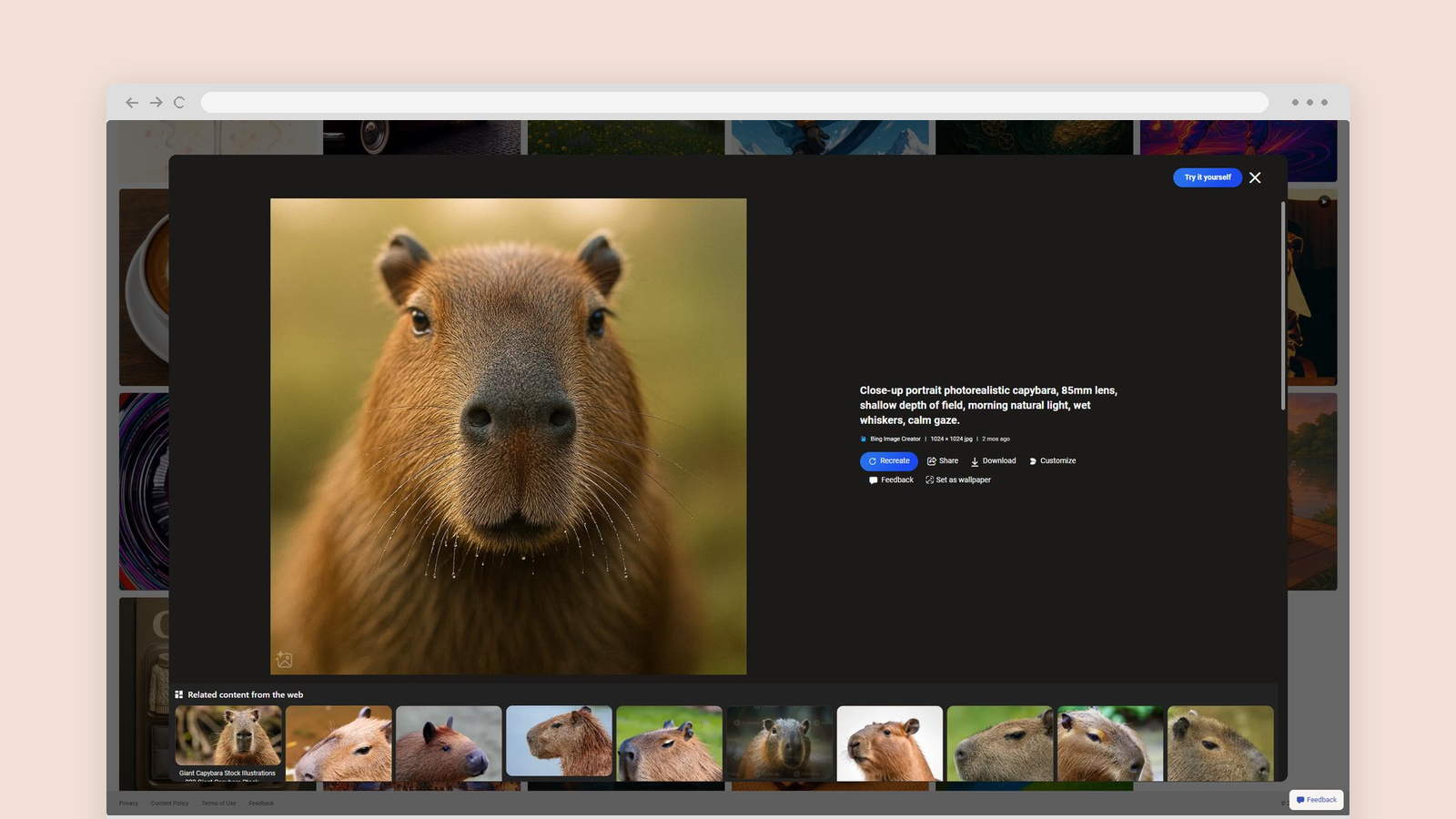
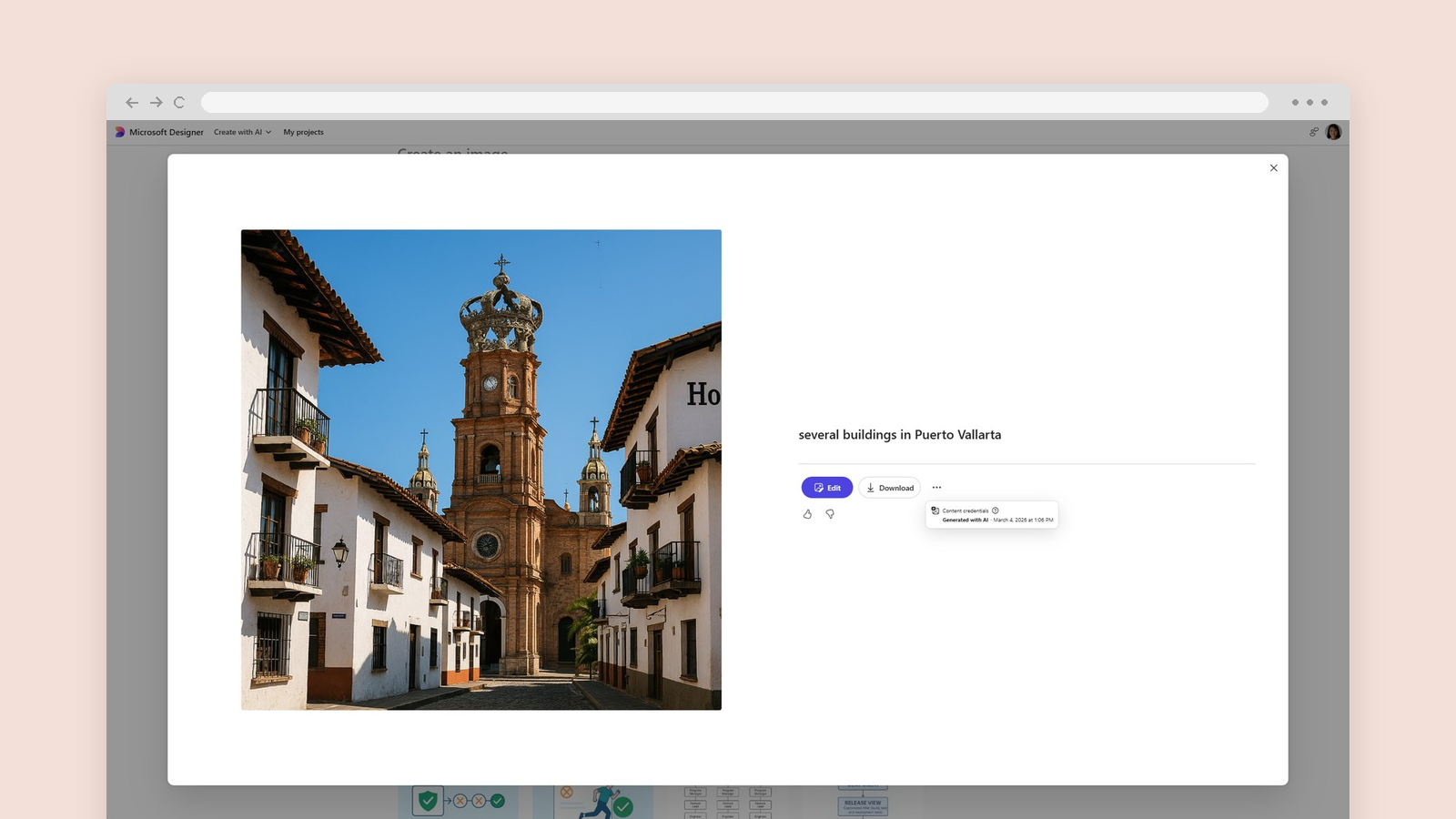
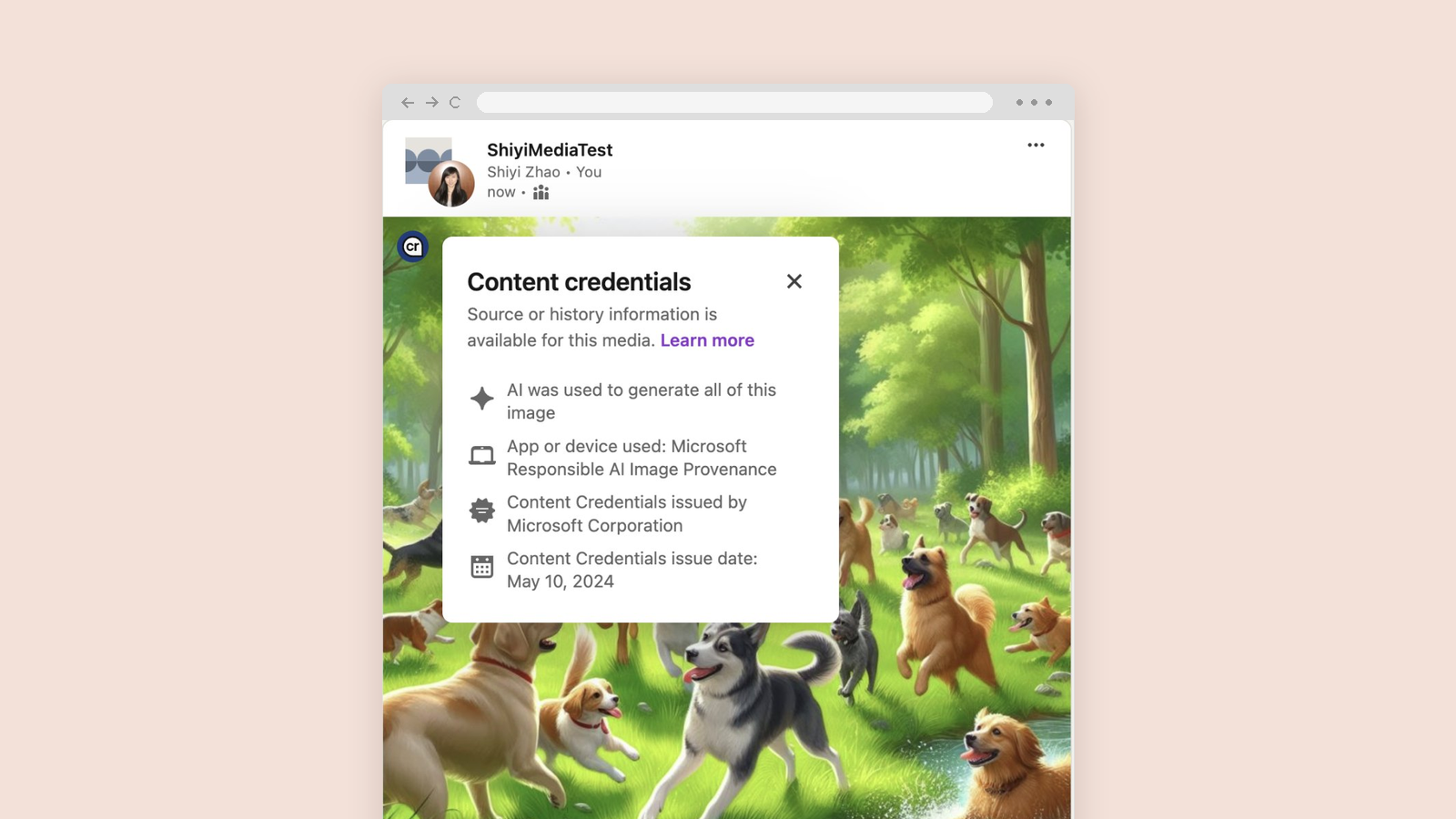
This framework gave teams across Microsoft a shared approach, while letting each product fit provenance naturally into its own experience.
Designing for the 2024 elections
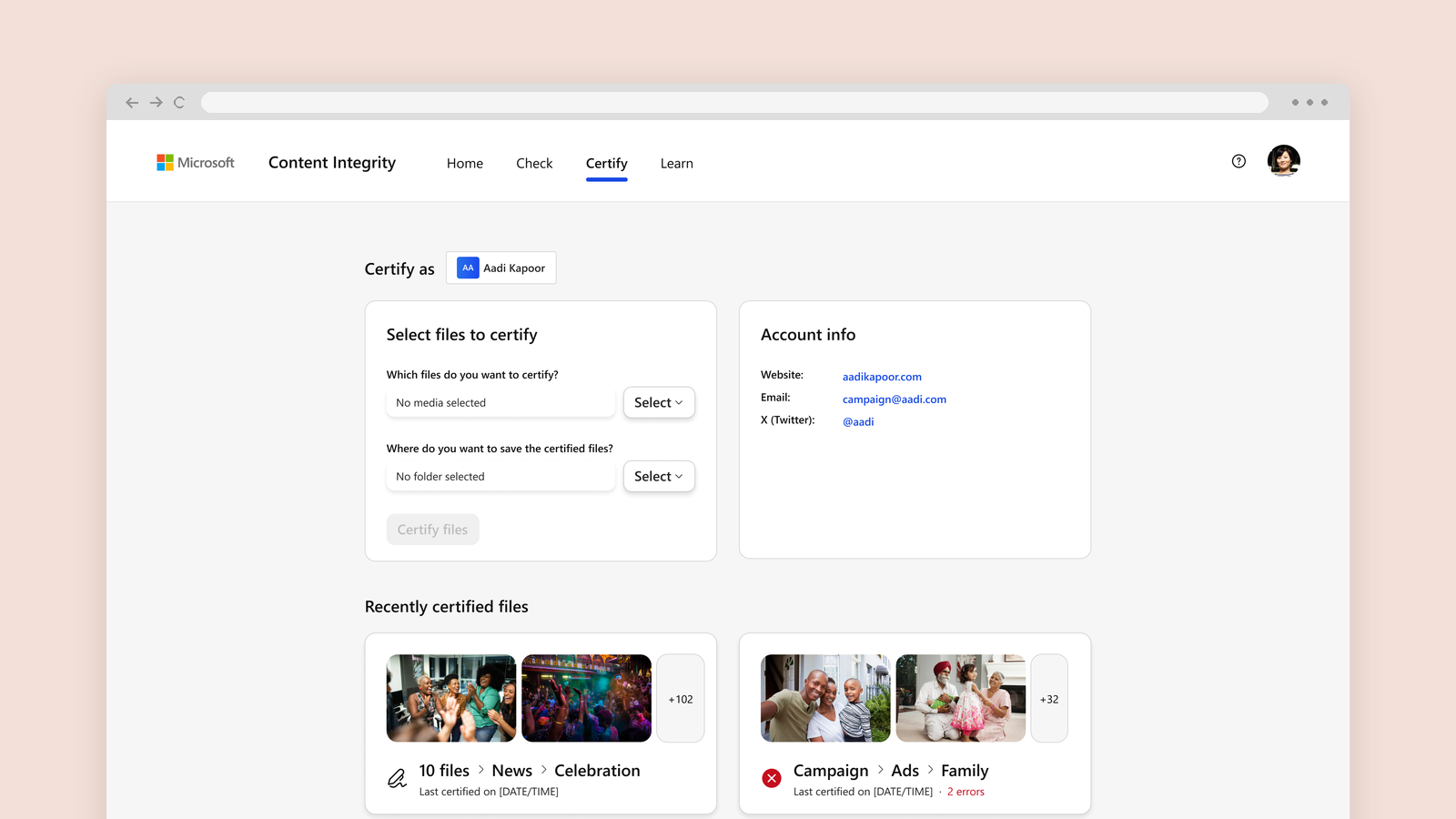
Ahead of the 2024 elections, Microsoft needed tools for campaigns and newsrooms to certify their media, and a site where anyone could check it. I led the design on a tight timeline, moving from mood boards to wireframes in a week and refining the experience through rapid rounds of testing with journalists and media consumers. Small changes in wording made a big difference. Changing “Verified by Microsoft” to “Certified by Microsoft,” and “Origin” to “Known origin,” helped people interpret the information accurately and trust the certification process.
Making disclosure work for creators
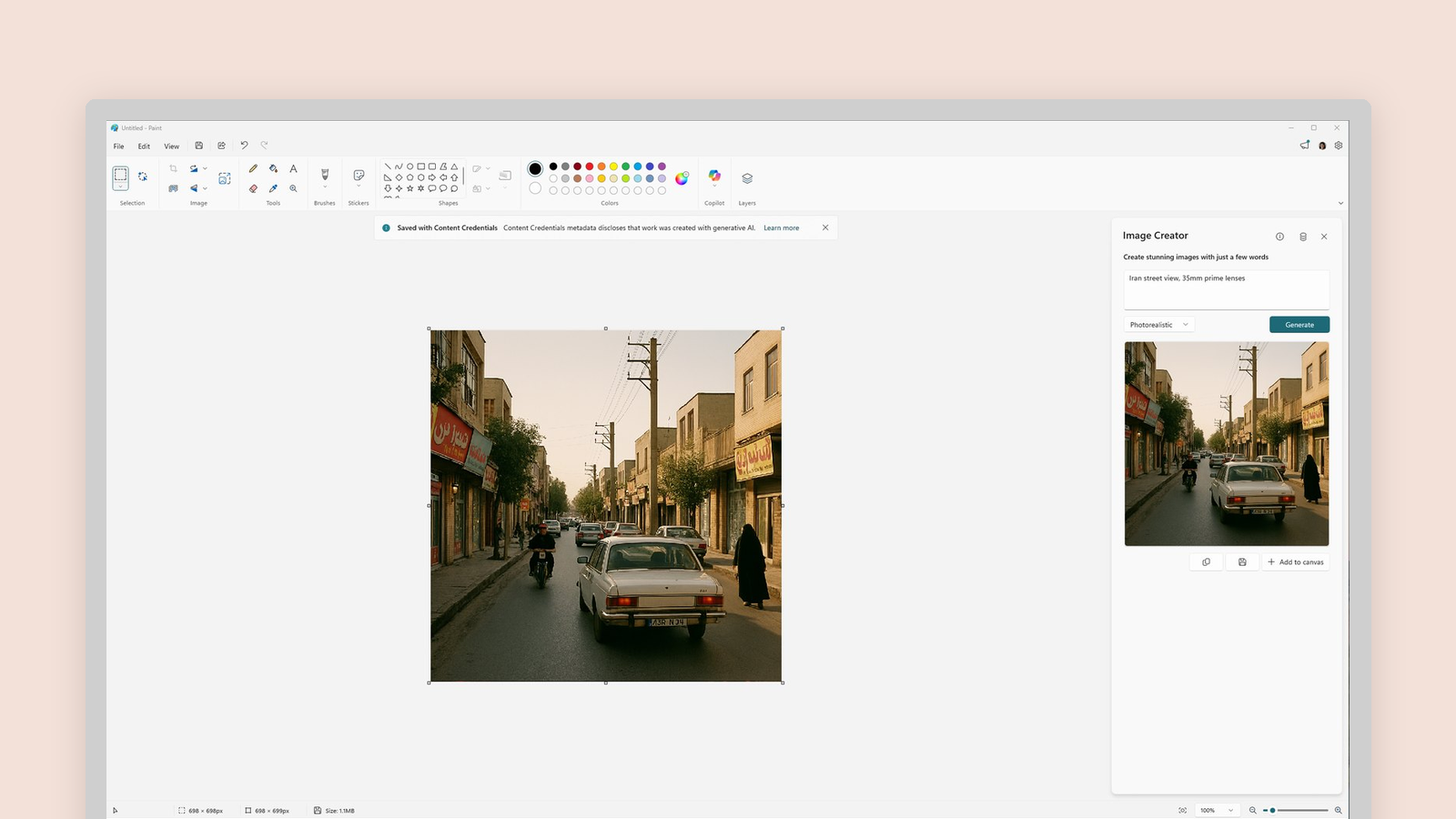
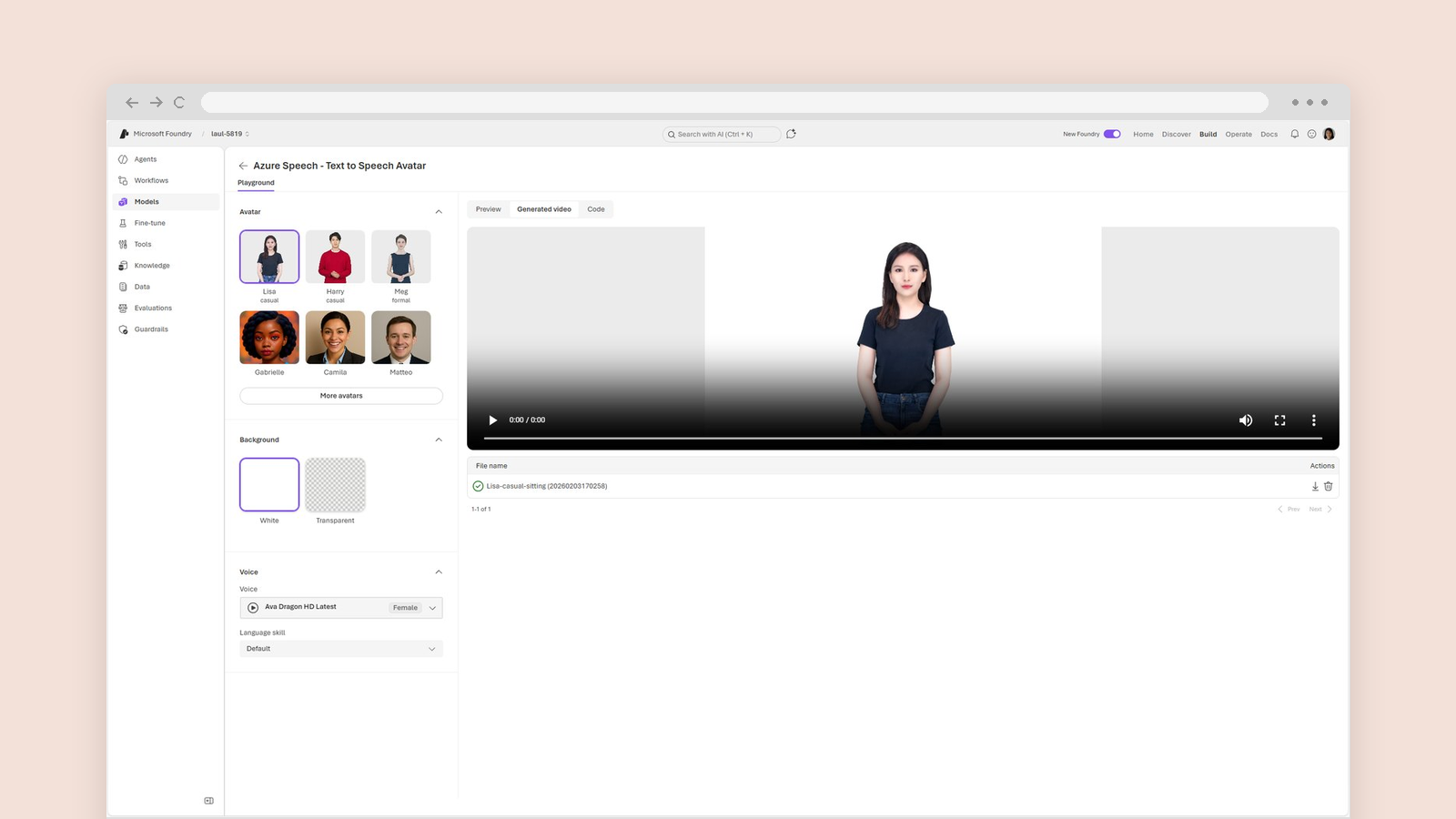
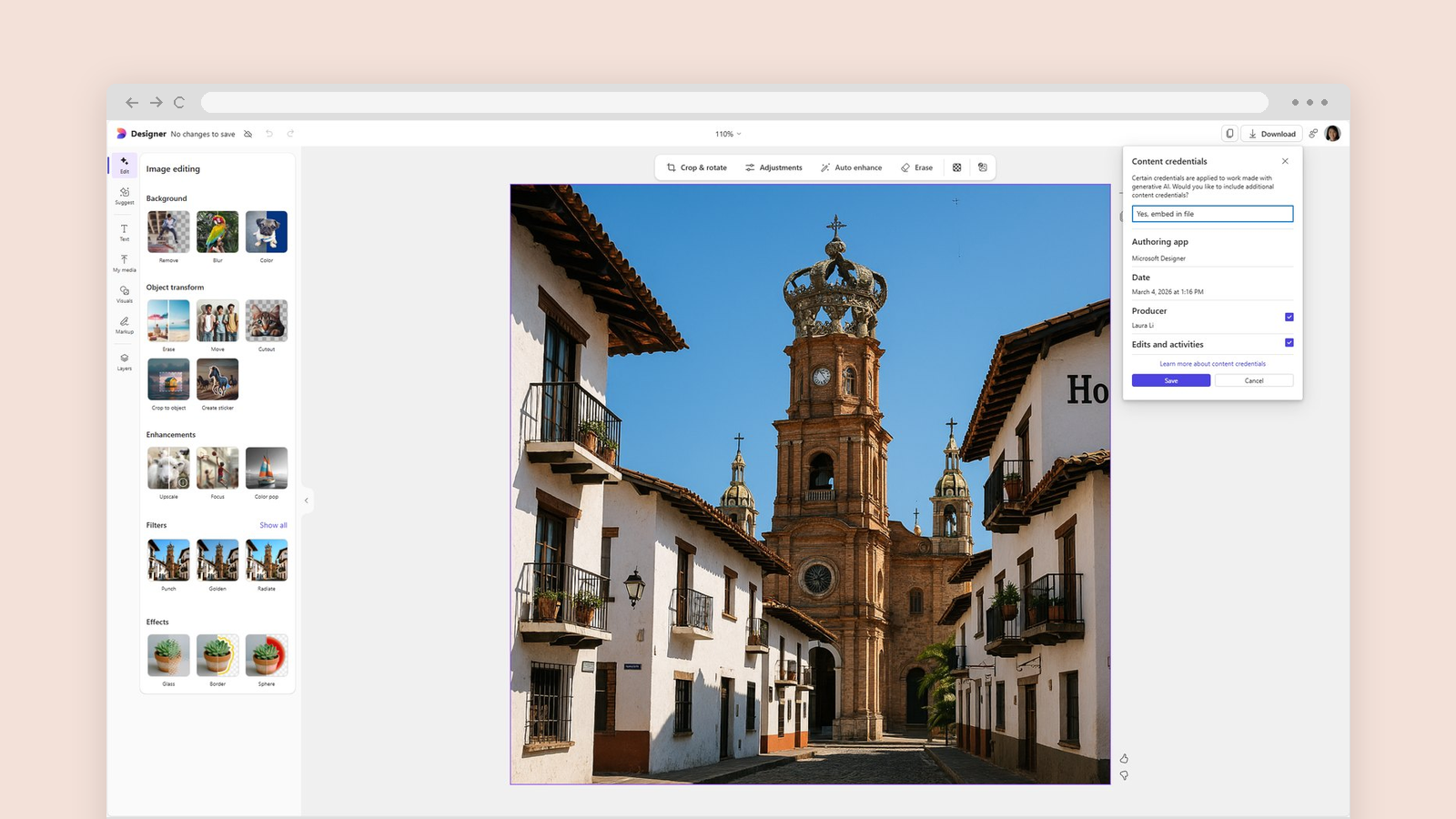
Provenance only works when creators share it. I designed certification experiences that make disclosure the default and show creators what they gain from it. Paint lets creators know AI use will be disclosed as they create, Azure AI Foundry discloses realistic synthetic voices by default, and Designer credits creators for their edits and activity.
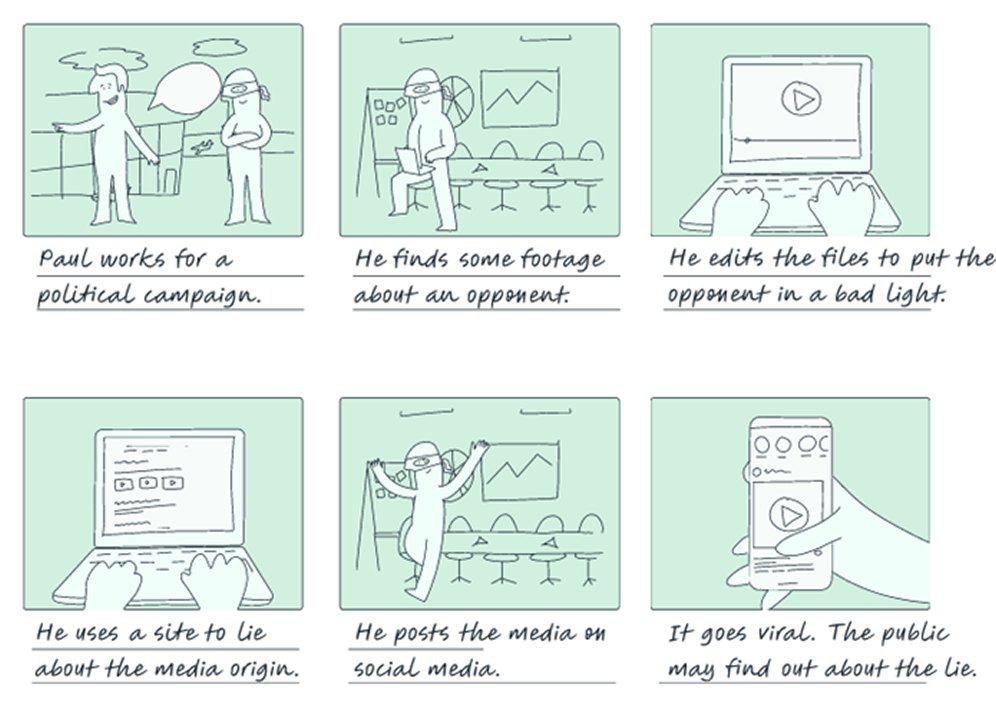
I also used storyboards to explore how certification could be misused, which shaped how products handle missing or partial credentials.
Content Credentials experiences shaped by this work now reach more than 300 million media consumers across Microsoft products. The design principles also contributed to the C2PA user experience guidelines shared across coalition members, and to a research paper on designing provenance systems for informed trust. I shared this work at Microsoft Research’s content provenance workshop in 2026.